Functional Ingredients
Oyster peptides are short-chain amino acid sequences extracted from oyster tissue by enzymatic hydrolysis. They bring umami depth, suppress harsh bitterness, and carry the functional food heritage of East Asian brewing tradition into a premium, export-ready format.
Published 17 June 2026 · By the JINPAI Brewery production team
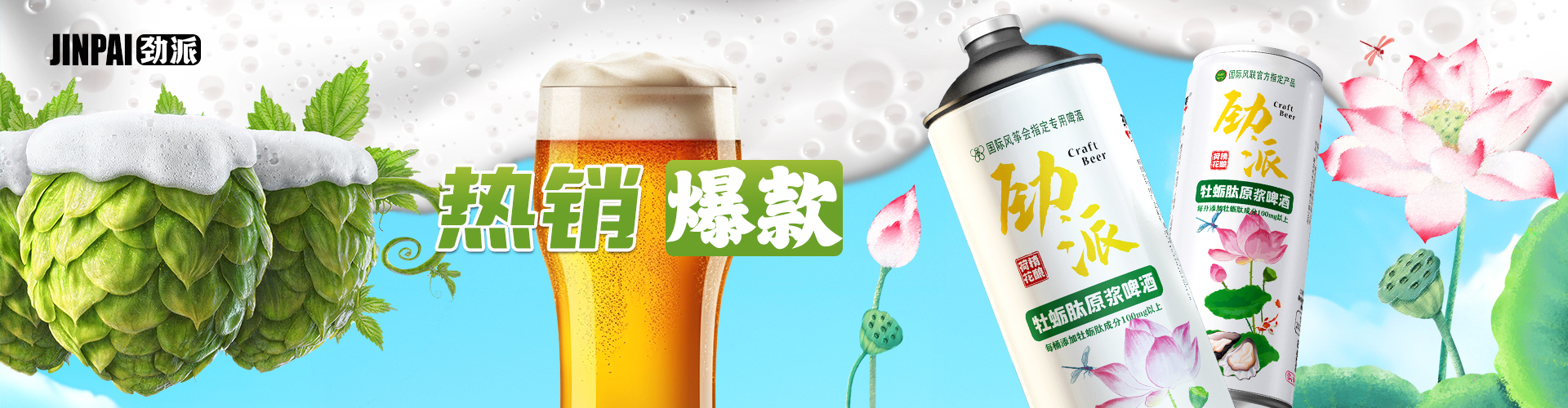
Oyster peptides are not a concentrate of oyster flavour, and they are not powdered oyster. They are a specific fraction — short-chain amino acid sequences of two to ten residues — liberated from the protein matrix of the Pacific oyster, Crassostrea gigas, by controlled enzymatic hydrolysis. The source tissue is cooked, the protein chains are cleaved by food-grade proteases (typically alcalase or papain at temperatures between 50°C and 60°C), the hydrolysate is filtered and spray-dried, and the result is a pale, water-soluble powder with a defined molecular-weight distribution typically below 3,000 Da.
The amino acid profile is what distinguishes oyster-derived peptides from generic hydrolysed protein. C. gigas tissue is unusually rich in taurine — a non-proteinogenic amino acid that survives hydrolysis intact — with concentrations in the dried extract commonly ranging from 8 to 14 g per 100 g of total amino acids. Glycine and alanine together account for another 15–20%, contributing sweetness and umami character. Zinc is co-concentrated during processing: oysters are among the highest dietary zinc sources in nature, and a quality peptide extract retains 50–120 mg/kg of zinc in the finished powder. That mineral co-concentration is part of why the ingredient attracts attention in functional food formulation.
Bioactive peptide research on oyster hydrolysates has identified sequences with in-vitro antioxidant activity (notably LANAK and FDAGL in published Chinese and Japanese literature), ACE-inhibitory potential, and hepatoprotective signalling. The evidence base is largely preclinical. That distinction matters enormously for labelling, which we address in the final section.
Adding a protein-derived ingredient to beer raises immediate formulation questions. Beer sits at pH 4.0–4.5 and is carbonated, filtered to near-clarity, and pasteurised or sterile-filtered. Plenty of ingredients fall apart under those conditions.
Oyster peptide extract handles the beer environment well. At the typical addition rates used in commercial functional beer — 0.1 to 0.5 g/L of finished peptide extract — the hydrolysate remains fully soluble at beer pH without precipitation or haze formation. The molecular weight is already below the threshold where cold-crash or filtration would strip it out. Heat stability during tunnel or flash pasteurisation is not a concern at these concentrations; the peptides are already hydrolysed and the short chains show no propensity to re-aggregate under commercial pasteurisation regimes (60°C for 20 minutes equivalent is well within tolerance). The ingredient goes in post-fermentation, before filtration, or is added to the bright tank — not into the kettle, where boiling would be redundant and potentially produce Maillard browning from the free amino acids reacting with wort sugars.
One parameter that brewers must watch is foam. Oyster hydrolysate contains surface-active peptide fractions that can influence head retention, generally positively at low addition rates. Above 0.5 g/L some formulations show over-foaming on pour; dialling the addition rate and carbonation volume together resolves it. This is a calibration issue, not a fundamental incompatibility.
The most immediately useful thing oyster peptides do in beer is modify the perception of bitterness. Iso-alpha acids — the principal bittering compounds from hops — can read as harsh, dry, or astringent, particularly in beers with lower residual malt sweetness. Short-chain peptides, especially those rich in glycine and glutamate-adjacent sequences, interact with the same taste receptors that modulate bitterness masking. The effect is measurable in sensory panels: at 0.2 g/L, trained tasters consistently rate oyster peptide-dosed beers as having softer, rounder bitterness than the identical base beer without the addition, even with identical measured IBU.
The second sensory contribution is body and mouthfeel. Oyster hydrolysate adds a subtle viscosity increase — not thickness, but a coating quality that makes the beer feel more substantial mid-palate. In zero-sugar lagers, where glucoamylase and high attenuation have stripped most of the dextrin body, a peptide addition can partially compensate for that loss without adding carbohydrate back to the label. That is a genuine formulation advantage.
The umami descriptor is accurate but requires context. At commercial addition rates, nobody mistakes the beer for an oyster stew. The effect is more analogous to the way a small amount of glutamate rounds out a broth — you notice the beer tastes more complete, more coherent, more satisfying, without being able to point at a shellfish note. Tasting panels in Japan describe it as koku: depth and continuity of flavour. That is the intended outcome.
Oyster peptide as a functional food ingredient has a longer history in East Asia than most export buyers realise. In Japan, oyster extract (カキエキス, kaki ekisu) has appeared in health foods, tonic drinks, and liver-support supplements since the 1980s. The ingredient sits within Japan's long tradition of umami-forward functional beverages — a category that predates the word "functional food" itself. Kirin's research into peptide-modified beers, and the market success of high-end oyster extract supplements from companies like Yakult and Taisho, established consumer familiarity with the concept that oyster-derived bioactives belong in a bottle you drink.
In China, the trajectory is different but the endpoint converges. The domestic health food industry has driven significant R&D into marine peptide ingredients since the mid-2000s, with oyster peptide from Shandong and Guangdong coastal processing facilities becoming a well-established supply chain. Functional beer as a category — beers positioned around an active ingredient rather than a style — gained traction in the Chinese premium segment from around 2018 onward, coinciding with rising demand for products that offer a reason to trade up beyond alcohol strength and packaging. Oyster peptide beer, particularly in premium glass bottle format, became one of the category's anchor products.
This context matters for export positioning. When a buyer in Southeast Asia, the Middle East, or Europe looks at an oyster peptide beer, they are looking at an ingredient with two to three decades of commercial track record in the world's largest functional food markets. That is a very different proposition from a novel botanical that has no regulatory history anywhere.
The single most consequential decision for any buyer sourcing oyster peptide beer for export is how the ingredient is labelled and what claims, if any, appear on-pack. Get this wrong and the product can be held at customs, recalled, or fined — not because the beer is unsafe, but because the claim structure does not fit the destination market's framework.
Oyster is a bivalve mollusc. In the EU, UK, Australia/NZ, and Canada, molluscs are a mandatory declared allergen. In the US, the FDA's major nine allergens list covers crustacean shellfish but not molluscs — however, FALCPA amendment discussions and voluntary best practice increasingly include them. The ingredient name on the ingredient list must make the oyster origin unambiguous; "peptide extract" alone is insufficient in most jurisdictions. The declaration must appear on the label in any market that requires it, regardless of the addition rate or the degree to which the protein has been hydrolysed.
In China, oyster peptide is approved under GB standards for functional food ingredients, and permitted health claims for relevant categories (antioxidant, liver protection) are substantiated through the National Health Commission approval pathway. For export to the EU, those Chinese approvals do not transfer — the EU Novel Food Regulation may apply depending on whether the ingredient has a history of significant use in the EU before May 1997. In the US, structure/function claims on an alcohol product face additional complexity from TTB labelling rules layered on top of FDA requirements. The safe position for most export buyers is to state the ingredient on the label without attaching a health claim, and to let the product sell on sensory and positioning grounds while claim substantiation is worked through for the specific market.
A buyer taking an oyster peptide beer to export needs from the brewer: a full ingredient specification for the peptide extract (molecular weight distribution, amino acid profile, heavy metals, microbiological spec), the quantity used per litre, a Certificate of Analysis for the extract lot used, and confirmation of the extract supplier's food safety certifications. This documentation is the basis for your customs declaration, your allergen management programme, and any future claim dossier. JINPAI supplies all of this as standard for functional product orders.
At the levels used in commercial oyster peptide beer (typically 0.1–0.5 g/L of peptide extract), the flavour contribution is a mild umami roundness and slight marine depth, not the direct oyster flavour you get from eating the shellfish. The peptide fraction responsible for flavour in raw oysters is largely denatured during extraction. What remains contributes mouthfeel and suppresses harsh bitter edges.
Oyster peptides are derived from shellfish and should be treated as an allergen. Most markets require shellfish allergen declaration on the label when oyster-derived ingredients are present. Buyers targeting markets with high shellfish allergy prevalence should confirm allergen labelling requirements before product launch.
Oyster peptide extract is an approved food ingredient under Chinese food standards (GB standards for functional food ingredients), and is used in functional foods and beverages across China, Japan, and South Korea. Export to specific markets may require confirmation that the ingredient meets local novel ingredient or functional food additive regulations — check destination country food law before labelling health claims.
Oyster peptide beer is a real product with a real ingredient, a real sensory effect, and a real regulatory trail you need to follow before selling it in your market. The peptide extract comes from Crassostrea gigas, produced by enzymatic hydrolysis, with a documented amino acid profile and food safety approval history in China, Japan, and South Korea. In beer, it suppresses harsh bitterness, adds umami body, and provides a credible differentiation story in the functional beverage premium segment. What it is not: a health drug, a claim-ready therapeutic, or an ingredient you can import and label however you like without checking local food law.
JINPAI's Functional Oyster-Peptide beer is a 5.0% ABV lager brewed with certified oyster peptide extract, finished in a premium glass bottle, and fully documented for export compliance. We supply the full ingredient dossier, COA, and formulation data as standard. If you are developing a functional beer line for export — or need a white-label oyster peptide beer for your own brand — send us the target market and volume and our export team will respond within 24 hours.
