OEM & Brand Launch
Supplement companies, functional beverage brands, and health-food retailers are increasingly looking at beer as a format. Here is what they need to know about the production side.
Published 17 June 2026 · By the JINPAI Brewery production team
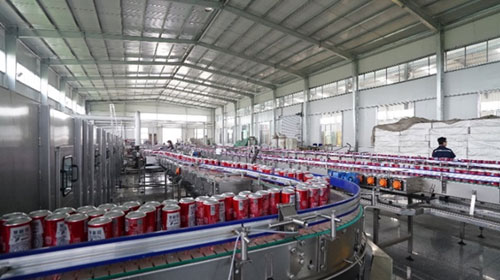
Beer is not an obvious vehicle for a health brand. But look at where premium supplement and wellness companies are selling, and the logic becomes clear. Social occasions — group dinners, post-sport catch-ups, corporate events — are built around a shared drink. Non-alcoholic and functional beverage categories have grown precisely because consumers want something to hold at those moments that is not water, is not a sugary soft drink, and carries some kind of story. Beer, with its long cultural permission to be present at exactly those occasions, is a format those brands are circling.
The economics also work. A premium functional beer with an ingredient narrative — oyster peptides, adaptogens, added B vitamins — can sit comfortably at two to three times the retail price of a standard lager. The ingredient addition itself may cost a few cents per unit. The price tolerance in the wellness channel is already conditioned by supplement pricing, so a USD 4–6 per-can positioned product is not a stretch. That margin profile is attractive to brands that already sell into health-food retail, specialty grocery, or direct-to-consumer supplement channels.
Beer also delivers an ingredient across a medium that is almost fully consumed. Unlike a capsule or a powder that consumers forget to take, a 330 ml can gets drunk. Bioavailability arguments aside, the compliance rate — the percentage of the dose actually consumed on occasion — is functionally 100%. That is a real argument for a brand thinking about consistent ingredient delivery per serving.
Standard OEM beer is straightforward: hand over a spec sheet, agree on a recipe, hit the target ABV and bitterness, package to spec, ship. Functional beer is harder. Three distinct complications arise that most health brands do not anticipate before they approach a brewery.
The first is ingredient stability in fermentation. Beer is an aggressive environment. The mash runs at 62–78°C. Fermentation acidifies the wort to a pH of 3.8–4.5. Yeast is metabolically active and will consume or degrade certain compounds. An ingredient that shows full bioactivity in a capsule formulation may lose a significant fraction of that activity by the time the beer is packaged, depending on when in the process it is added and how thermally labile it is. This has to be tested, not assumed. Adding a probiotic strain to a fermenting beer and expecting it to survive through packaging is not realistic. Adding a zinc salt is. These are not interchangeable decisions.
The second complication is regulatory complexity for health claims. This catches health brands particularly hard, because they are accustomed to operating in a supplement regulatory regime where structure/function claims are relatively permissive with appropriate disclaimers. Alcohol labelling is a different world. In the EU, US, Australia, Canada, and most major export markets, health claims on alcohol above a threshold ABV are either explicitly prohibited or require substantiation at a standard that is practically impossible to achieve. The brand arriving with copy like "supports immune function" or "reduces inflammation" is going to have that copy stripped by a customs authority or trigger a formal complaint. The ingredient narrative approach — "brewed with elderberry extract," "contains oyster peptides" — is the viable path.
The third complication is testing and documentation. A health brand launching a functional beer needs to confirm, batch by batch, that the declared ingredient is present at the declared level in the finished product. That means analytical testing for the active compound — peptide content, vitamin level, botanical marker compound — not just a brewery COA for ABV and IBU. Fewer contract breweries have that capability in-house. The brand needs to either source a brewery that does, or build third-party testing into the production cadence from the start.
The brands that launch well treat this as a proper product development process, not a quick sourcing exercise. The steps below are sequential. Skipping or compressing any of them creates a problem downstream that costs more to fix than the time saved.
Define the target consumer, the drinking occasion, the flavour profile, the ABV range, and the primary functional ingredient. Nail the last one before anything else. Research its stability profile: what temperature does it degrade at, what pH is it stable across, does brewer's yeast metabolise it, what is the minimum effective dose per serving you want to claim. Get this information from the ingredient supplier in writing, with data. A vague answer at this stage becomes a formulation failure six weeks later.
Work with the brewery to determine where in the process the ingredient gets added — pre-fermentation, post-fermentation, at packaging. Heat-stable, fermentation-stable ingredients (mineral salts, stable peptides) can go in early. Heat-sensitive or yeast-sensitive ingredients (certain vitamins, live cultures, delicate botanicals) must go in late, typically post-fermentation or at the bright beer tank stage. The addition point affects ingredient cost, process complexity, and the amount of active compound retained in the finished can.
A pilot brew at 500–2,000 litres validates the recipe and exposes sensory problems before they become production problems. Some functional ingredients carry flavour: oyster peptides have an umami note that must be accounted for in the base recipe. Certain botanicals turn colour under fermentation. Vitamin additions can affect flavour stability. The pilot is the time to find all of this. Sample the pilot against the sensory brief with a panel of at least six people, ideally including target-consumer proxies rather than just internal evaluators.
Before any label design starts, get the proposed claim language reviewed by a regulatory consultant familiar with the destination market's alcohol labelling rules. Every market is different. The EU's EFSA framework, the US TTB and FDA interplay, Australia's FSANZ code, the UK's post-Brexit labelling rules — each has its own list of what you can and cannot say on an alcoholic beverage. Budget 4–6 weeks for this review. Change the claim language based on the output, not the other way around.
The first commercial run should be treated as a validation batch, not just a production event. Pull samples at multiple points — bright beer pre-packaging, finished cans at start/mid/end of fill — and send them to a third-party laboratory for analysis of the functional ingredient at its declared level, alongside the standard beer chemistry. This is your substantiation evidence and your COA basis. A batch that passes sensory but shows functional ingredient content below the declared level on the label needs to be reformulated, not shipped.
Label artwork is produced against the approved claim language and the confirmed nutrition facts from the finished-product testing. In many markets, an alcoholic beverage label requires country-specific approval before import — China's CNCA import registration, US TTB label approval (COLA), and so on. Build this into your timeline. A shipment arriving without the correct label approval documentation gets held. The brewery can supply the production records and COA supporting those applications; the importer is responsible for making them.
These are not hypothetical. They are the mistakes we see repeatedly from brands entering beer from a supplement background. Each one is avoidable with the right process.
Writing copy for an alcoholic beer as if it were a dietary supplement. Claims like "reduces oxidative stress," "supports liver health," or "boosts immunity" are either outright prohibited on alcohol labels in most jurisdictions or require a level of clinical evidence that does not exist for a beer product. Regulatory review must happen before label design, not after.
Choosing an ingredient without checking its fermentation stability. Probiotics are the classic example: adding a live culture strain to a fermenting beer at 20°C in an acidic, CO2-saturated, alcohol-accumulating environment and expecting a meaningful CFU count in the finished package is wishful thinking. Collagen peptides with poor acid stability, certain carotenoids, heat-labile plant enzymes — all of these degrade in-process. Test before you commit to a label claim.
Agreeing to a minimum order quantity that exceeds the brand's realistic initial market capacity. A functional beer launching into a new channel through a distributor does not need 50,000 cases in the first order. It needs enough to seed the market, get reorder data, and validate the sell-through. Overordering the first run locks cash into slow-moving inventory and creates shelf-life pressure that forces discounting — exactly the wrong signal for a premium positioning.
JINPAI is a Shandong source factory with approximately 200,000 tons of annual production capacity, 100+ fermentation tanks across multiple process lines, and a 36,000-can-per-hour filling operation. We have an in-house laboratory that runs chemistry on every production batch: ABV, real and apparent attenuation, IBU, colour, microbiological counts, and — for functional products — ingredient-specific assays where we have the analytical method in house.
Our existing functional SKU — the Oyster-Peptide Beer, a 5.0% ABV lager brewed with oyster-derived peptide — has gone through exactly the development process described above: ingredient stability validation, addition-point optimisation (post-fermentation addition to the bright beer tank), sensory panel work, third-party peptide content verification, and export label review for the target markets. We run that product on the same lines as our standard OEM contracts. The infrastructure is there.
For health brands approaching us with a functional brief, we offer: ingredient stability pre-assessment before a pilot is committed to; pilot brewing from 500 litres with sensory reporting; in-house analysis for standard beer parameters and co-ordination with third-party labs for functional ingredient assay; production from 5,000 cases MOQ for initial market-seeding runs; and export documentation including COA, health certificates, and brewery certification letters. We do not write label copy or provide regulatory sign-off — that stays with the brand and their consultant, as it should. What we do is make sure the liquid in the can matches the number on the label.
If you are a supplement brand, a functional beverage company, or a health-food retailer exploring a private-label or branded beer, the conversation starts with a one-page concept brief: target market, functional ingredient, ABV range, packaging format, and intended first-order volume. Send that to our export team and we will come back within 24 hours with a feasibility read, a rough cost range, and a proposed timeline.
Stability during fermentation depends on the ingredient's sensitivity to heat, pH, and yeast metabolism. Peptides (like oyster peptides) are generally stable in beer's pH range of 3.8–4.5 and are not significantly metabolized by brewer's yeast. Mineral salts (zinc, magnesium) are stable. B vitamins have variable stability — riboflavin (B2) is stable, thiamine (B1) is partially metabolized by yeast, B12 is partially consumed. Heat-sensitive botanicals should be added post-fermentation to preserve activity.
Almost certainly not. Most major markets — EU, US, Australia, Canada, UK — explicitly prohibit health claims on alcoholic beverages above a threshold ABV (typically 1.2–2.0% depending on the jurisdiction). The route around this is to either reduce ABV below the threshold (producing a non-alcohol or very low alcohol beer) or to position the product on ingredient narrative rather than explicit health claims (e.g., "brewed with oyster peptides" vs. "reduces joint inflammation").
Allow 16–24 weeks: 4–6 weeks for recipe development and ingredient sourcing, 2–4 weeks for pilot brewing and sensory evaluation, 4–6 weeks for regulatory review of label claims in the destination market, 2–4 weeks for label design and printing, and 4–6 weeks for production scheduling and run. Brands that try to compress this timeline usually end up with a label that cannot legally be used or a recipe that has not been properly validated.
